How Much Does New Cairo For Expats Cost In 2026?
Introduction
New Cairo for expats is one of the most common relocation questions in Egypt, and for good reason. This purpose-built, master-planned district east of Cairo was developed from the late 1990s onward as a deliberate alternative to the city's older, denser neighborhoods. For expat families and professionals, it offers a modern, predictable, and self-contained lifestyle that is fundamentally different from the experience of living in central Cairo.
Quick Answer: New Cairo is a purpose-built district east of Cairo that appeals to expats through its gated compounds, international schools, and modern infrastructure — a lifestyle choice that trades the historical texture of central Cairo for space, safety, and convenience.
Key Takeaways
- New Cairo is a purpose-built, master-planned district east of Cairo, offering a modern alternative to the city's older, denser neighborhoods for expat families and professionals.
- The area is defined by its gated compounds, international schools, and a more predictable, car-dependent lifestyle.
- Costs vary significantly between compounds, and the "expat bubble" means many daily needs are met within a self-contained community.
- Relocation involves a clear sequence of practical steps: from visa and compound selection to settling-in logistics.
- The lifestyle trade-off is real: you gain space, safety, and infrastructure, but lose the historical texture and organic street life of central Cairo.
The Complete Answer: New Cairo for Expats in 2026
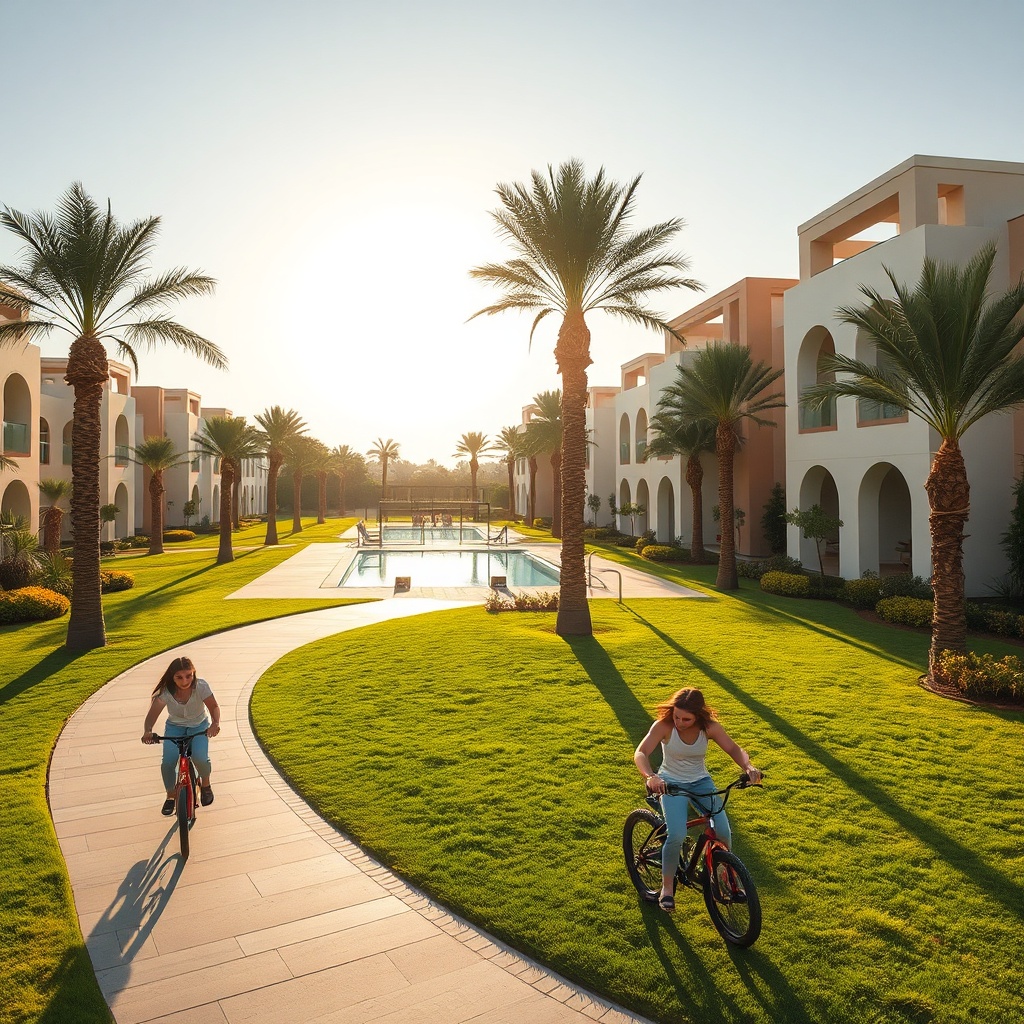
A modern residential compound in New Cairo showcasing the expat lifestyle with villas, gardens, and family activities.
The Definitive Overview
New Cairo is not one neighborhood but a collection of master-planned districts and gated compounds that together form a self-contained urban zone on Cairo's eastern edge. Development began in the late 1990s, and the area has grown into one of the most popular destinations for foreigners looking for expat neighborhoods in Cairo.
The appeal for expats is straightforward: purpose-built communities, modern infrastructure, and a concentration of international amenities that are hard to find elsewhere in the city. International schools, private clinics, supermarkets, and community clubs are all within reach, often without leaving the compound gates.
This makes New Cairo a lifestyle choice, not just a location. Living here means embracing a more suburban, compound-centric existence — one of the best areas for foreigners in Cairo if you prioritize predictability and convenience over urban texture.

An international school in New Cairo for expats, highlighting modern facilities and a diverse student community.
The Core Expat Experience
The physical environment of New Cairo is defined by wide roads,
Conclusion
New Cairo for expats is not just a practical relocation choice — it is a deliberate decision to trade the chaotic charm of central Cairo for a life defined by space, safety, and predictability. The gated compounds, international schools, and self-contained amenities make the transition smooth, but they also create an "expat bubble" that can feel isolating if you crave organic street life. Before you commit, weigh your priorities carefully: if you value modern infrastructure and a family-friendly environment, New Cairo is the clear winner. If you want the historical texture of old Cairo, you may find the suburban rhythm too quiet. The best way to decide is to experience it firsthand. Book a short-term rental in one of the compounds, explore the daily commute, and visit the schools before signing a lease. Your relocation success depends on matching the lifestyle to your expectations. Start planning your move today, and discover whether New Cairo is the right fit for your family.
FAQ
1. How much does it cost to live in New Cairo as an expat?
Living costs in New Cairo vary significantly depending on the compound and lifestyle. A two-bedroom apartment in a mid-range compound can range from $800 to $1,500 per month, while luxury compounds like Mountain View or Palm Hills can exceed $2,500. Beyond rent, you should budget for utilities, internet, and a car — essential since public transport is limited. International school fees are another major cost, typically $5,000 to $15,000 per year per child. Groceries at premium supermarkets like Metro or Seoudi are comparable to Western prices. A family of four should plan for a monthly budget of $3,000 to $6,000, excluding school fees, to maintain a comfortable expat lifestyle.
2. Which are the best compounds for expats in New Cairo?
The "best" compound depends on your priorities. For families with children, compounds near international schools like Cairo American College or the German School are ideal — examples include Palm Hills Katameya and Al Rehab. For professionals seeking a more vibrant social scene, Mivida and The Village offer community events and modern amenities. Compound 90 is popular for its central location and access to the American University in Cairo. When choosing, consider not just the amenities but also the compound's management quality, security, and proximity to your workplace. Visiting multiple compounds and talking to current expat residents is the most reliable way to find the right fit.
3. Is it safe to live in New Cairo as a foreigner?
Yes, New Cairo is widely considered one of the safest areas in Greater Cairo for expats. The gated compounds feature 24/7 security, controlled access, and CCTV surveillance, which significantly reduces the risk of petty crime. The area's wide, well-lit roads and modern infrastructure also contribute to a safer, more predictable environment. That said, you should still follow standard safety practices — avoid driving alone late at night, keep your car doors locked, and stay aware of your surroundings when outside the compound. Overall, the security infrastructure in New Cairo is a major reason many expat families choose to live there, especially those with young children.
4. Do I need a car to live in New Cairo?
Yes, a car is essential for living in New Cairo. The area is designed for car-dependent living, with wide roads and low density. Public transport options are extremely limited, and walking between compounds is often impractical due to distances and summers' extreme heat. Most expats own or lease a car, and many families have two. If you do not drive, you will rely heavily on ride-hailing services like Uber or Careem, which can be expensive for daily commutes. Consider purchasing a reliable, fuel-efficient car or leasing one through your employer. Parking within your compound is usually included, making car ownership straightforward.
5. How do I choose between New Cairo and central Cairo for my expat assignment?
Your choice should be based on your lifestyle priorities and daily needs. Choose New Cairo if you value safety, modern amenities, international schools, and a predictable suburban routine. It is ideal for families with children and for professionals working in the eastern Cairo districts. Choose central Cairo if you want historical charm, walkability, and a vibrant street life, and if you can tolerate older buildings, traffic congestion, and less consistent infrastructure. A practical approach is to consider your daily commute: if your employer is in New Cairo or the New Administrative Capital, living there saves you hours of traffic. Many expats start with a short-term rental in one area before committing long-term. If you are still unsure, spend a weekend exploring both zones and see which feels more like home.