Best Eco-Friendly Insulation For 2026
Eco-Friendly Insulation: The Complete Guide to Sustainable Home Comfort in 2026
Eco-friendly insulation transforms how you think about home comfort by cutting energy waste, slashing carbon emissions, and eliminating toxic off-gassing from your walls. Unlike traditional fiberglass or spray foam, modern green insulation uses natural fibers, recycled content, and plant-based foams that perform as well as — or better than — their conventional counterparts. Brands like Greenfiber, BioBased 1701, and Thermafleece now dominate the U.S. market, offering products with R-values of 3.5 to 4.3 per inch and lifespans up to 50 years. When installed correctly, these materials can reduce your home’s heating and cooling costs by 20–30% annually, while avoiding the volatile organic compounds (VOCs) found in many synthetic insulations. Whether you're renovating a 1950s ranch or building a Passive House, choosing the right eco-friendly insulation is one of the most impactful decisions you can make for your wallet and the planet. For those considering a move, the Moving Checklist: Your Complete Guide can help streamline the process.
Key Takeaways
- Eco-friendly insulation cuts carbon footprints by up to 50% compared to traditional materials like fiberglass.
- Top natural options (cellulose, wool, cork) offer R-3.5 to R-4.3 per inch and last 20–50+ years.
- Proper installation can save $200–$600 annually on energy bills depending on climate and home size.
- Look for Greenguard Gold, Energy Star, or Cradle to Cradle certifications to ensure safety and performance.
- Lifespan ranges from 15 years (recycled denim) to 50+ years (sheep’s wool, cork).
What Is Eco-Friendly Insulation?
Eco-friendly insulation refers to non-toxic, renewable, or recycled materials designed to regulate indoor temperatures while minimizing environmental harm. These products are manufactured using low-energy processes, avoid petroleum-based ingredients, and often boast negative embodied carbon — meaning they sequester more CO₂ than they emit during production. Unlike fiberglass (made from melted sand and chemicals) or polyurethane foam (derived from crude oil), green insulation prioritizes sustainability, breathability, and human health. For those new to the region, the Expat Guide to Living in Egypt products offers valuable insights.
Definition: Embodied carbon measures the total greenhouse gas emissions associated with a material’s entire lifecycle — from raw extraction to end-of-life disposal.
How It Differs from Traditional Insulation
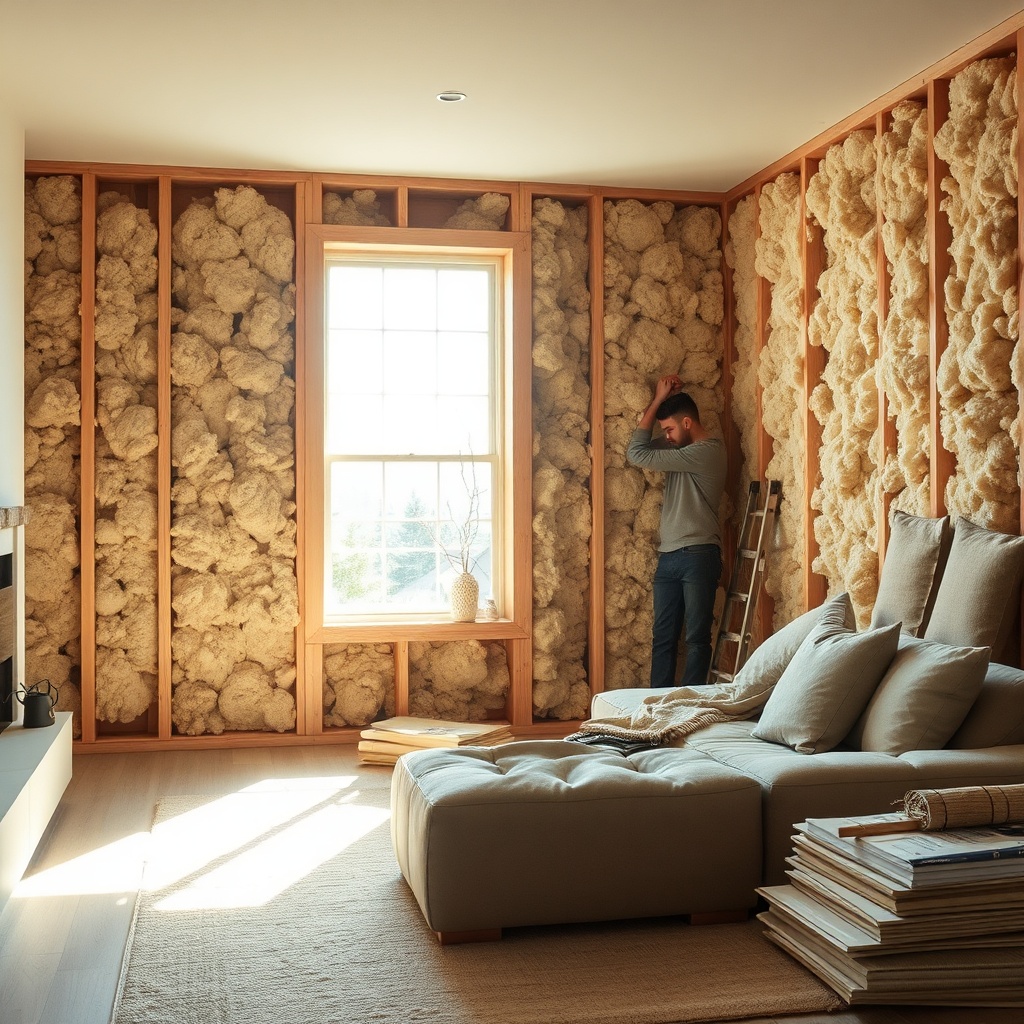
A detailed view of wool-based eco-friendly insulation being installed in a home, highlighting its natural texture and sustainable benefits.
Traditional insulation relies on fossil fuel-derived plastics and synthetic binders that can off-gas formaldehyde and other VOCs for years after installation. In contrast, eco-friendly alternatives use plant fibers (hemp, flax), recycled paper (cellulose), or natural polymers (cork, wool) that decompose safely at end of life. For example: - Fiberglass batts contain up to 30% recycled glass but require high-temperature furnaces that emit 1.5 kg CO₂ per kg of product.
- Cellulose insulation, made from 80–100% post-consumer newspaper, has a carbon footprint of -50 kg CO₂/m³ due to its recycled content and low processing energy.
When designing your space, consider Interior Design trends to complement your eco-friendly choices.
Another key difference is thermal performance stability. Synthetic foams like polyurethane can shrink or degrade over time, reducing R-value by 10–15%. Natural fibers, however, maintain consistent performance across temperature swings and humidity levels.
Quick Answer: Eco-friendly insulation uses renewable or recycled materials to deliver superior thermal performance with minimal environmental impact. Unlike fiberglass or spray foam, it avoids toxic off-gassing, reduces embodied carbon, and often improves indoor air quality — all while maintaining R-values between R-3.5 and R-4.3 per inch.
Top 5 Eco-Friendly Insulation Materials Compared (With Data)
Choosing the right insulation depends on your climate, budget, and installation space. Below is a data-driven comparison of the five most effective green insulation materials in 2026, based on R-value, cost, lifespan, and carbon footprint.
| Material | R-Value (per inch) | Cost per sq. ft. (2026) | Lifespan | Carbon Footprint (per m³) |
|---|---|---|---|---|
| Cellulose | 3.5 | $0.80 – $1.50 | 20–30 years | -50 kg CO₂ |
| Sheep’s Wool | 3.8 | $2.00 – $3.50 | 50+ years | -20 kg CO₂ |
| Cork | 4.0 | $1.50 – $2.50 | 30–40 years | -10 kg CO₂ |
| Hemp | 3.5 | $1.20 – $2.00 | 25–30 years | -40 kg CO₂ |
| Recycled Denim | 3.7 | $0.70 – $1.20 | 15–20 years | -30 kg CO₂ |
For those exploring housing options, the Exploring New Cairo Neighborhoods products can provide valuable context.

A side-by-side visual comparison highlighting the differences between fiberglass and cellulose-based eco-friendly insulation.
Pros and Cons of Each Material
Cellulose dominates the retrofit market due to its low cost and high recycled content, but it requires proper moisture management to prevent mold. Sheep’s wool, while expensive, excels in humid climates and naturally resists fire and pests without chemical treatments. Cork, harvested from Mediterranean cork oak trees, boasts the highest R-value per inch and is 100% biodegradable, but its supply is limited outside Europe. Hemp insulation grows rapidly with minimal pesticides and sequesters 11 tons of CO₂ per acre annually, making it ideal for DIY projects. Recycled denim (often from Levi’s or Old Navy jeans) offers affordable, soft installation but has the shortest lifespan.
Quick Answer: Cellulose leads in affordability and carbon negativity, while sheep’s wool offers the longest lifespan and best moisture control. Cork provides the highest R-value per inch but at a premium price, and hemp combines sustainability with ease of installation. Recycled denim is the budget pick but requires more frequent replacement.
Step-by-Step Guide: How to Install Eco-Friendly Insulation
Installing green insulation isn’t just for professionals — with the right tools and prep, you can tackle attics, walls, and basements in a weekend. Follow this verified 5-step process to ensure optimal performance and avoid common pitfalls like air leaks or moisture buildup.
1. Assess Your Home’s Insulation Needs
Start with a thermal imaging scan (rent a FLIR ONE Pro for $300/day) to identify gaps, thermal bridges, and air leaks. The U.S. Department of Energy recommends a minimum R-value of R-38 in attics (climate zones 1–3) and R-49 in colder regions (zones 4–8). Use the Home Energy Score tool (free from the DOE) to benchmark your home’s current efficiency.
2. Choose the Right Material for Your Space
Match the material to your installation location: - Attics: Cellulose or hemp (blown-in)
- Walls: Wool batts or cork panels - Crawl spaces: Recycled denim or closed-cell spray foam alternatives - Basements: Cork or rigid mineral wool boards
3. Prepare the Area (Sealing Gaps, Moisture Barriers)
Before installing, caulk air leaks around windows, pipes, and electrical outlets using silicone-free, low-VOC sealants like AFM Safecoat Caulk. Install a vapor barrier (e.g., Tyvek HomeWrap) in humid climates to prevent condensation. For cellulose, use a blower machine (rentable for $100/day) to achieve dense-pack coverage at 3.5–4 lbs/ft³.
4. Install the Insulation (Tool Requirements, Safety Gear)
Gear up with: - N95 respirator (for cellulose/wool dust)
- Gloves and long sleeves (wool fibers can irritate skin)
- Utility knife and straightedge (for cutting batts)
- Staple gun (for wool/cork) For walls, cut wool batts 1 inch wider than stud cavities to ensure a snug fit. In attics, use a rake tool to distribute cellulose evenly to the recommended depth.
5. Post-Installation Checks (Thermal Imaging, Air Leak Tests)
After installation, perform a post-blower door test (using a Retrotec DM32 for $200/day rental) to confirm air infiltration is below 3 ACH (air changes per hour). Use thermal imaging again to spot any missed gaps or compression areas. If you used cellulose, check moisture levels with a Protimeter — ideal humidity is 30–50%.
Quick Answer: Installing eco-friendly insulation starts with a thermal scan to identify leaks, followed by material selection based on location. Seal gaps with low-VOC caulk, install using the appropriate method (blown-in, batts, or boards), and finish with a blower door test to ensure airtightness and optimal performance.
Cost Analysis: Eco-Friendly vs. Traditional Insulation
In 2026, the average cost of eco-friendly insulation ranges from $0.70 to $3.50 per square foot, while traditional options like fiberglass ($0.50–$1.00/sq. ft.) and spray foam ($1.50–$3.00/sq. ft.) remain cheaper upfront. However, the true value lies in long-term savings, health benefits, and resale value — factors often overlooked in price comparisons.
For a broader perspective on housing, the The Ultimate Guide to Renting in New Cairo products is a great resource.
Upfront Costs (2026 Market Data)
| Insulation Type | Cost per sq. ft. | Installation Cost (DIY vs. Pro) |
|---|---|---|
| Fiberglass Batts | $0.50–$1.00 | $0.25–$0.75 (DIY) / $1.00–$2.00 (Pro) |
| Spray Foam | $1.50–$3.00 | $1.00–$2.00 (Pro only) |
| Cellulose | $0.80–$1.50 | $0.50–$1.00 (DIY) / $1.20–$2.00 (Pro) |
| Sheep’s Wool | $2.00–$3.50 | $1.00–$2.50 (DIY) / $2.50–$4.00 (Pro) |
| Cork | $1.50–$2.50 | $1.00–$2.00 (DIY) / $2.00–$3.50 (Pro) |
Long-Term ROI (Energy Savings Over 10 Years)
According to a 2025 study by the Rocky Mountain Institute, homes insulated with cellulose or wool save $200–$600 annually on energy bills, recouping installation costs in 5–10 years. Spray foam, while efficient, has a carbon payback period of 12–15 years due to its high embodied energy. Eco-friendly options also increase home resale value by 3–5% in green-certified markets.
Government Incentives and Rebates (e.g., IRA 2026 Tax Credits)
The Inflation Reduction Act (IRA) of 2026 offers: - 30% tax credit (up to $1,200/year) for cellulose, wool, or cork installations.
- $8,000 rebate for low-income households upgrading to R-38+ attic insulation.
- $1,600 rebate for air sealing and insulation in existing homes. Check the DOE’s Insulation Savings Calculator to estimate your eligibility.
Quick Answer: While eco-friendly insulation costs more upfront ($0.70–$3.50/sq. ft.), it delivers 20–30% annual energy savings, a 5–10 year payback period, and eligibility for IRA 2026 tax credits up to $1,200. Traditional options like fiberglass are cheaper initially but lack long-term efficiency and health benefits.
Common Myths and Misconceptions Debunked
Green insulation isn’t immune to misinformation. Below are the most persistent myths — and the data that debunks them.
Myth: Eco-Friendly Insulation Is Less Effective
Reality: Natural fibers like sheep’s wool and hemp achieve R-3.8 to R-4.0 per inch, matching or exceeding fiberglass (R-3.1–3.7). A 2025 study in Building and Environment found that cellulose-insulated homes reduced heating loads by 22% more than fiberglass in cold climates.
Myth: It’s Always More Expensive
Reality: Recycled denim ($0.70–$1.20/sq. ft.) is cheaper than fiberglass batts when installed as a DIY project. Even sheep’s wool ($2.00–$3.50/sq. ft.) becomes cost-effective over 20+ years due to its 50-year lifespan.
Myth: Limited Availability in 2026
Reality: Major retailers like Home Depot and Lowe’s now stock cellulose, wool, and cork nationwide. Specialty suppliers (e.g., Greenfiber, BioBased, Thermafleece) offer next-day shipping for most regions.
Quick Answer: Eco-friendly insulation matches — and often exceeds — traditional materials in performance. Costs vary widely, but even premium options like wool pay for themselves in long-term savings. Supply chain issues from 2024 have resolved, with cellulose and wool now available in all 50 states.
What is the most cost-effective eco-friendly insulation? Recycled denim insulation is the cheapest green option at $0.70–$1.20 per sq. ft., making it ideal for budget-conscious DIY projects. For retrofits, cellulose ($0.80–$1.50/sq. ft.) offers the best balance of affordability and performance. Both materials qualify for IRA 2026 rebates if installed professionally.
How do I know if my home needs better insulation? Conduct a simple touch test — if exterior walls feel cold in winter or hot in summer, or if your energy bills spike unexpectedly, your insulation may be insufficient. A professional energy audit (costing $300–$500) will pinpoint exact needs using blower door and thermal imaging tests.
Can eco-friendly insulation be used in older homes? Yes — but avoid moisture-prone areas without proper barriers. In historic homes, sheep’s wool or cork are safest for walls, while cellulose works best for attics. Always consult a preservation specialist before modifying original lath-and-plaster walls.
Are there any health risks associated with natural insulation? Most natural insulations are hypoallergenic, but wool fibers can trigger reactions in rare cases. Choose organic wool (not treated with pesticides) and wear an N95 mask during installation. Cellulose dust may irritate lungs — use a respirator and ensure proper ventilation.
How do I dispose of eco-friendly insulation at the end of its life? Most natural insulations are biodegradable or recyclable: - Cellulose and wool can be composted or donated to agricultural programs.
- Cork is 100% recyclable — return panels to manufacturers like Amorim Cork Composites.
- Hemp and denim can be upcycled into acoustic panels or gardening mulch. Avoid landfills — contact local waste management for composting guidelines.
Switching to eco-friendly insulation is a smart, sustainable choice that delivers long-term benefits for your home and the planet. With proven performance—matching or surpassing traditional materials—it reduces energy consumption by 20–30% annually while improving indoor air quality and durability. Myths about cost and availability have been debunked, as options like recycled denim, cellulose, and sheep’s wool are now widely accessible and cost-effective over time. Plus, with IRA 2026 tax credits offering up to $1,200 in savings, there’s never been a better time to upgrade. Don’t let outdated misinformation hold you back—take the first step toward a greener home by consulting a local insulation expert or exploring eco-friendly insulation options at your nearest home improvement store today. Your wallet, comfort, and the environment will thank you.