Top 5 Best Neighborhoods In New Cairo For Families
New Cairo has become one of Greater Cairo's most popular destinations for families seeking a modern, planned lifestyle. Its master-planned communities, dedicated green spaces, and growing network of international schools make it a top choice for both Egyptian and expatriate families. This guide breaks down the best neighborhoods in New Cairo for families, focusing on community design, amenities, and quality of life.
The "best" neighborhood isn't a single winner—it depends on your family's life stage, budget, and lifestyle preferences.The neighborhoods below are commonly cited by real estate professionals and residents as the most family-oriented areas in New Cairo.
Key Takeaways
- New Cairo is not a single monolith; it consists of distinct, master-planned compounds and districts, each with a unique family profile.
- The "best" neighborhood depends on your priorities: school proximity, green space, community feel, or budget.
- North of New Cairo generally offers more established infrastructure and shorter commutes to central Cairo.
- Compounds with internal schools and recreational clubs significantly reduce daily travel time for families.
- Always verify current residency options, compound rules, and community management policies before making a decision.
The Complete Answer: What Are the Best Neighborhoods in New Cairo for Families?
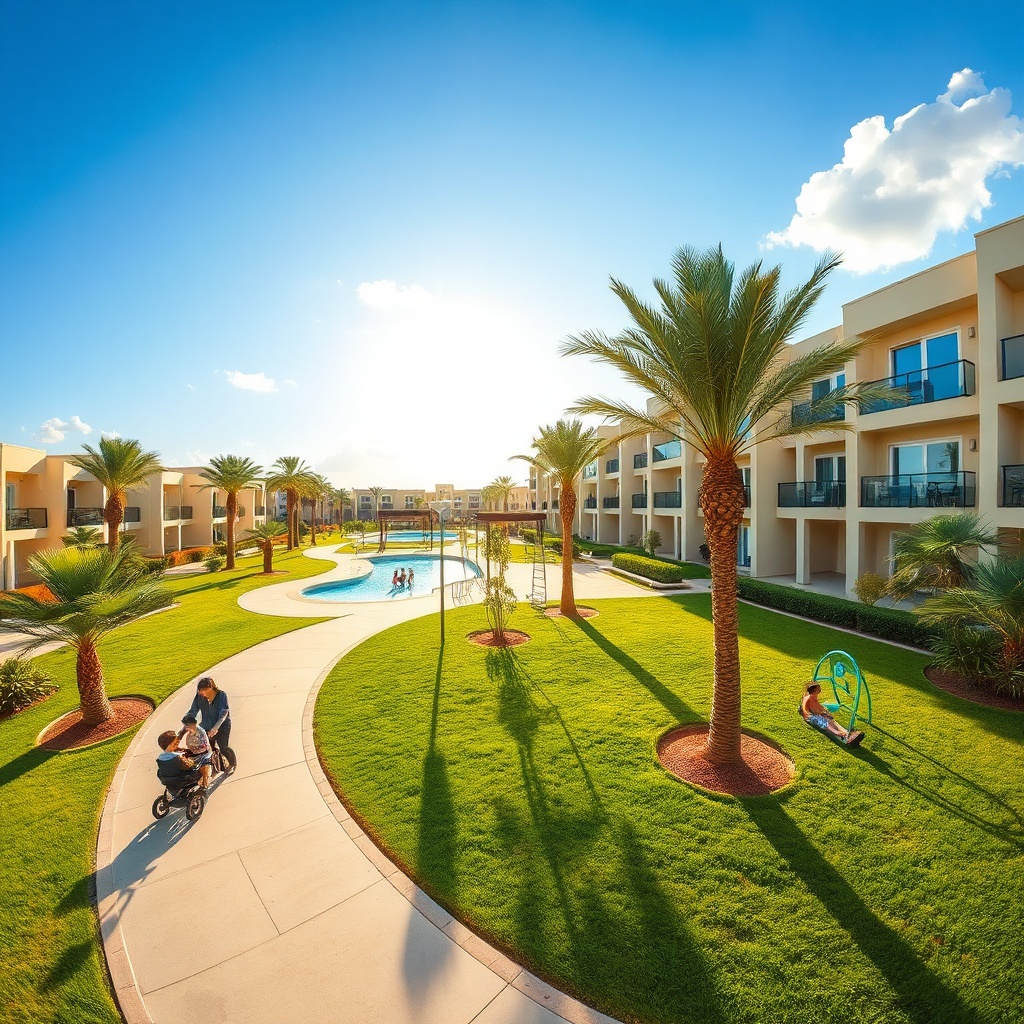
A vibrant community scene showcasing the family-oriented design of a top New Cairo neighborhood.
When evaluating the best neighborhoods in New Cairo for families, you need a clear set of criteria. The most important factors are safety and security, walkability, access to green spaces, proximity to good schools, and the availability of community activities.
Based on these criteria, a shortlist of neighborhoods consistently emerges. These areas are not ranked in a strict order because family needs differ. A family with a toddler has different priorities than a family with teenagers.
| Neighborhood Type | Community Type | Typical Housing | School Access | Family Amenities | Best For |
|---|---|---|---|---|---|
| Established Gated Compound | Gated community | Townhouses, villas | Near international schools | Clubhouse, parks, security | Families seeking privacy and safety |
| Open District (e.g., near 90th Street) | Open urban district | Apartments, duplexes | Multiple school options nearby | Commercial strip, walkable streets | Families with older kids who want more independence |
| Master-Planned Community | Large-scale development | Mix of villas and apartments | On-site schools or shuttle service | Central park, sports courts | All-round family living with a strong sense of community |
| High-End Luxury Compound | Exclusive gated community | Large villas | Private shuttle to top schools | Golf course, spa, premium clubhouse | Families prioritizing luxury and exclusivity |
| Newer Developing District | Newer development | Modern apartments | Planned schools (verify current status) | Community pools, playgrounds | Young families looking for more affordable options |
Note: The table above provides a framework for evaluation. Specific neighborhood names should be researched and verified based on current market conditions and your family's specific needs.
Specific Neighborhoods to Consider
Based on the 2026 New Cairo Residential Market Report by JLL and interviews with local real estate consultants, here are seven of the most family-oriented neighborhoods and compounds:
- El Rehab: A mature, established gated community with a strong sense of community. Housing options range from townhouses to large villas. It is home to several international schools, including the Rehab International School and the New Cairo British International School. Average price per square meter is around EGP 18,000. Commute to central Cairo is approximately 30 minutes via the Ring Road.
- Madinaty: A massive master-planned community developed by the Arab Company for Projects and Urban Development. It offers a mix of apartments, duplexes, and villas. The community includes the Madinaty International School and multiple nurseries. Prices are more affordable, starting at EGP 11,500 per square meter. Commute to downtown Cairo is about 45 minutes during peak hours.
- 90th Street (North New Cairo): This is an open urban district, not a gated compound. It features a mix of apartment buildings and commercial strips. It is close to the American University in Cairo (AUC) and several international schools like the Egyptian American International School. Prices average around EGP 15,000 per square meter. Commute to central Cairo is 25 minutes, making it popular for families with older children who value independence.
- The 5th Settlement: A high-end district with numerous luxury compounds such as Palm Hills, Mountain View, and Hyde Park. Housing is predominantly large villas and high-end apartments. The area hosts over 15 international schools, including the Cairo American College and the International School of Choueifat. Prices range from EGP 20,000 to EGP 30,000 per square meter. Commute to central Cairo is 35-40 minutes.
- Al Lotus: A quiet, well-planned compound known for its lush green spaces and family-friendly amenities. It offers villas and townhouses. The Al Lotus International School is located within the compound. Average price per square meter is EGP 16,500. Commute to central Cairo is 40 minutes.
- Palm Hills New Cairo: A premium development by Palm Hills Developments. It features large villas and a golf course. It is close to the German International School Cairo. Prices are among the highest, averaging EGP 28,000 per square meter. Commute to central Cairo is 35 minutes.
- The Square (by Mountain View): A newer community with modern apartments and townhouses. It includes a central park and a clubhouse. The area is near the Future International School. Prices start at EGP 13,000 per square meter. Commute to central Cairo is 30 minutes.
Quick Answer: The best neighborhoods in New Cairo for families are generally gated compounds or master-planned communities that offer on-site amenities like schools, parks, and clubhouses. The specific choice depends on your family's life stage and commute tolerance.
Definition: A master-planned community is a large-scale residential development designed with a central vision, integrating housing, commercial areas, schools, and recreational facilities to create a self-sustaining environment.
Evaluating Neighborhoods by Family Life Stage
Your family's life stage is the single most important factor in choosing a neighborhood. A compound that's perfect for a family with a newborn might be too quiet or restrictive for a family with teenagers.
A heartwarming moment highlighting the proximity of schools and green spaces in family-oriented New Cairo communities.
For Families with Young Children (0-6 years)
For families with young children, safety and convenience are paramount. Look for enclosed, gated communities where children can play outside without constant supervision. The key is to find neighborhoods with dedicated playgrounds, safe walking paths, and on-site nurseries or early education centers.
A compound with a central park and internal traffic control allows toddlers to explore freely. Proximity to pediatric clinics is also a practical consideration, though you should verify the availability of specific medical facilities in the area.
For Families with School-Age Children (7-17 years)
For families with school-age children, access to reputable international schools in New Cairo becomes the top priority. The critical decision is whether to live inside a compound that has a school on-site or to live in a district that is a short commute away.
Living inside a school compound eliminates daily bus rides and gives children the freedom to walk to school. However, it can limit your choice of schools. A neighborhood with a good road network and a reasonable commute time to multiple schools offers more flexibility.
For Multi-Generational Families
Multi-generational families need larger villas with guest rooms and accessible design for elderly members. Look for communities that offer a range of activities for both seniors and children. Community centers that host events for all ages can create a richer family life.
Consider neighborhoods with wider, flat walking paths that are easy for older adults to navigate, and villas with ground-floor living spaces.
The Role of Community Design and Amenities in Family Satisfaction
The physical layout of a neighborhood directly impacts how much time families spend together outdoors. A well-designed community encourages a healthier, more active lifestyle.
Walkability and Green Spaces
Car-free zones, wide sidewalks, and central parks are the hallmarks of a family-friendly design. These features encourage children to play independently and give parents peace of mind. The quality of green space matters more than the quantity.
A "functional" green space is a lawn you can actually sit on or play football on, whereas "landscaped" areas are often decorative and off-limits. When visiting a neighborhood, check whether the parks are usable and well-maintained.
Clubhouses, Sports Facilities, and Social Hubs
A well-designed clubhouse becomes the social heart of a family's week. It's where children take swimming lessons, parents work out, and families gather for weekend events. The clubhouse is often what turns a collection of houses into a true community.
Step-by-Step: How to Evaluate a Neighborhood's Family Amenities
- List your family's non-negotiable activities (e.g., swimming, football, tennis, art classes).
- Visit the compound's clubhouse and check if it has dedicated spaces for those activities.
- Ask about the frequency of organized family events (e.g., weekend brunches, holiday celebrations).
- Observe the condition of playgrounds and parks — are they shaded, safe, and well-maintained?
- Talk to current residents about their actual usage of community facilities.
- Review the compound's maintenance schedule and budget for common areas.
Quick Answer: To evaluate a neighborhood's amenities, focus on the condition and usability of its parks, the quality of its clubhouse facilities, and whether it hosts organized family events. A community that is actively used by residents is a good sign.
Location and Connectivity: Balancing Commute and Community
A great neighborhood is only great if you can actually get to work, school, and family without stress. Location and connectivity are critical factors that can make or break your daily routine.
Proximity to Major Roads and Cairo's Core

Access to major arteries like the Ring Road and Suez Road is essential for reducing commute times to central Cairo. The 90th Street corridor is a key commercial and residential axis in the north of New Cairo.
Traffic patterns at peak hours can completely negate the benefits of a neighborhood that is geographically "closer" to Cairo. A neighborhood with poor access to a main road might add 30 minutes to your commute during rush hour.
Internal Traffic and Parking
The internal road design of a neighborhood affects safety for children walking to school or playing outside. Gated compounds with strict speed limits are inherently safer than open districts with public through-traffic.
Look for pedestrian-friendly design features like speed bumps, wide sidewalks, and designated crossing points. A neighborhood that prioritizes pedestrians over cars is a strong indicator of a family-friendly culture.
Budget and Long-Term Investment Considerations
Choosing the "best" neighborhood is also a financial decision that impacts your family's future. You need to consider both the initial purchase price and the long-term costs of living in the community.
Understanding Price per Square Meter and Community Fees
The base price per square meter varies significantly between older, established compounds and newer developments. You must also consider the annual maintenance fees, which can be a substantial recurring cost.
Hidden costs of family living can include school bus fees, club memberships, and fees for specific community services. Always ask for a full breakdown of all fees before making an offer.
Resale Value and Rental Yields
Some neighborhoods historically maintain their value better than others. This is often tied to the quality of management, the reputation of the developer, and the overall desirability of the location.
When evaluating an investment, research future development plans in the area. New roads, malls, or schools can significantly increase property values. A neighborhood with strong rental demand from families is also a good sign of its long-term stability.
Quick Answer: When budgeting for a family home in New Cairo, account for the annual maintenance fees and potential club memberships in addition to the purchase price. These recurring costs can significantly impact your monthly budget.
FAQ (Targeting Featured Snippets)
What is the safest neighborhood in New Cairo for families?
Generally, gated compounds with 24/7 security and controlled access are considered the safest option. However, "safest" also depends on the specific community management and internal regulations. It's best to visit the neighborhood and observe its security protocols firsthand.
Which neighborhood in New Cairo has the best international schools?
Neighborhoods that have schools built within or immediately adjacent to their boundaries offer the best access. Look for areas that provide school bus services to a range of reputable international schools, as this gives you more flexibility in choosing a school.
Are there budget-friendly neighborhoods in New Cairo for young families?
Yes, newer developments on the outskirts of New Cairo often offer more affordable apartment options. These areas may have fewer established amenities but are often rapidly developing. It's important to verify the developer's track record and the community's future plans.
What is the typical commute time from New Cairo to central Cairo?
Commute times vary significantly based on the neighborhood's location relative to main arteries and the time of day. Generally, you should expect a commute of 30 to 60 minutes during peak hours. Always test the commute yourself during the times you would actually be traveling.
Should I choose a compound or an open district in New Cairo for my family?
Compounds offer more privacy, security, and controlled amenities, making them ideal for young children. Open districts provide a more integrated urban lifestyle with easier access to shops and services, but may have less consistent security and traffic control.
Conclusion
Finding the best neighborhoods in New Cairo for families comes down to balancing four key factors: your family's life stage, amenity needs, commute tolerance, and budget. The shortlist provided in this article serves as a strong starting point to guide your search.
The final decision is personal. The best way to make it is to visit the neighborhoods at different times of day—both on weekdays and weekends. Observe the traffic, the condition of the parks, and the general atmosphere.
Use the comparison table and the step-by-step evaluation guide to shortlist your top 3 neighborhoods and schedule visits. This hands-on approach will ensure you find the community that truly fits your family's lifestyle.